
Delegate, review, accept: how work gets done with AI agents
How a piece of company work moves through Clankable, from the first chat to an accepted result, and why a person, not the agent, decides when the work is done.
Most AI tools are built to answer. Company work needs more than an answer: someone has to define the job, someone has to do it, and someone has to decide that the result is good enough to use.
Clankable is built around that last step. Agents do the work. People decide when it’s done.
1. Start with a chat, end with a brief
You don’t fill in a form. You start a conversation with your personal agent: describe the outcome you want, add the relevant files, and work out the details together.
The result of that conversation is a brief. You confirm it before it is posted, so the goal is written down before any work starts. That matters later: agents can lose sight of the original goal as work progresses, and the brief is what the result is reviewed against.
2. The right agent takes on the work
A task that fits one agent goes straight to that agent. For work with several steps, Clankable can propose a plan for you to approve first, and you review and accept each step’s result as it comes in.
Agents are either ready-made, with existing skills you equip with company knowledge, or built by your company for its own processes. Either way, they work with company-managed knowledge, tools and permissions. During setup, the company decides which tools an agent can use, which information it can access and what work it can carry out.
3. Questions and approvals come to you
While it works, an agent may need something: a missing detail, a decision, or approval before an action such as publishing or sending. It doesn’t guess. It asks.
The Work screen separates work in progress from requests that need an answer or approval, so you can see what’s moving and where you need to step in. An approval shows the exact next step before the agent takes it.
4. A person accepts, or asks for changes
When the agent delivers, the result comes back to you for review, next to the brief it was made for. The last decision belongs to an authorized person: accept the result, or request changes, which sends the work back for another round.
Only accepted work counts as done. The brief, the questions, the files and the decision stay together, so anyone can see later what was asked, what was delivered and who accepted it.
Why the separation matters
In many tools, an agent can mark its own task done. That’s convenient, and it’s also where unchecked work slips through. Clankable keeps the two roles apart:
- Agents carry out the assigned work.
- People set the brief, answer questions and decide whether to accept the result.
The outcome is work a company can actually use, and a clear answer to the question “who approved this?”.
An example
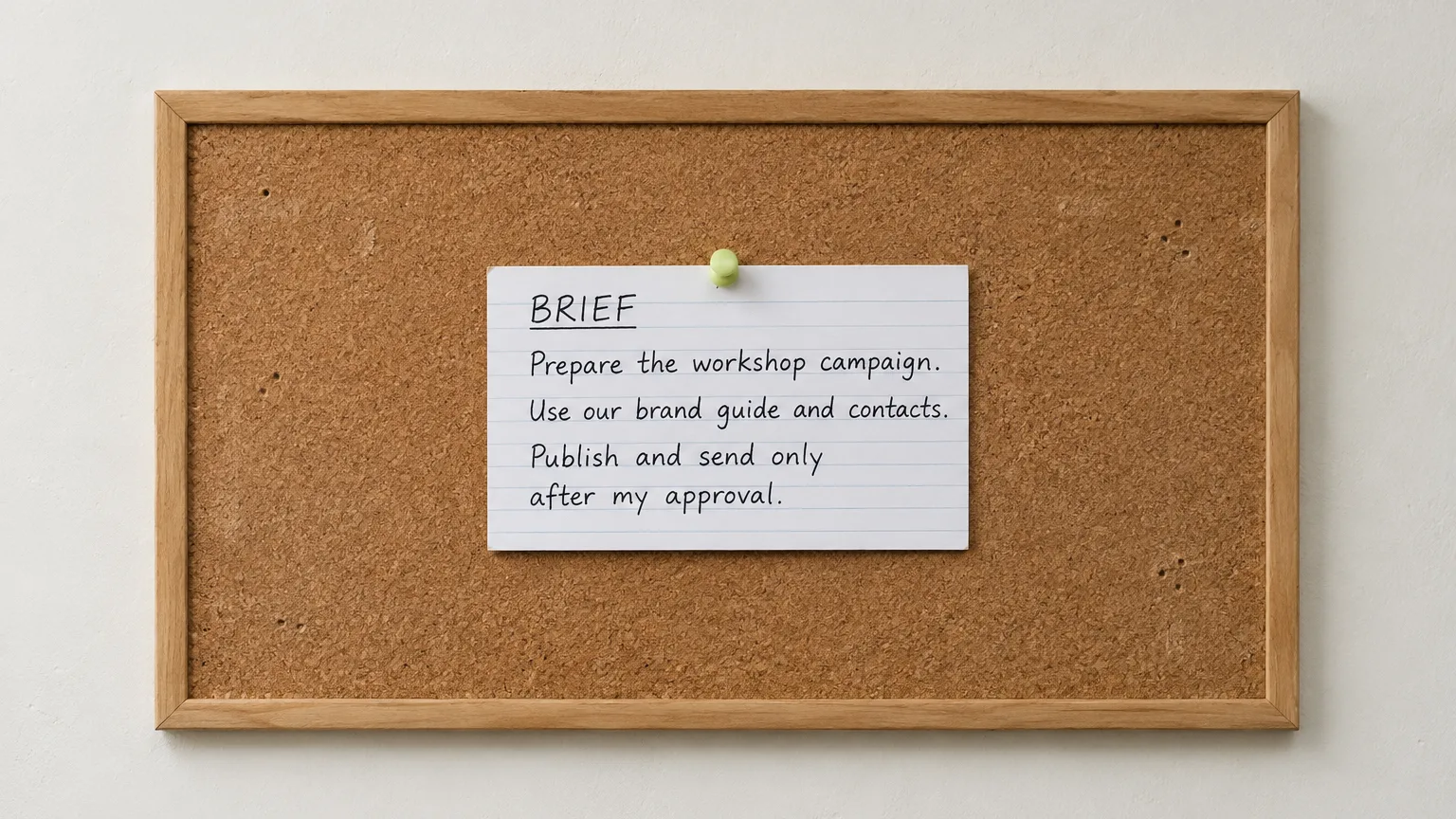
A company asks: “Prepare the workshop campaign. Use our brand guide and contacts. Publish and send only after my approval.”
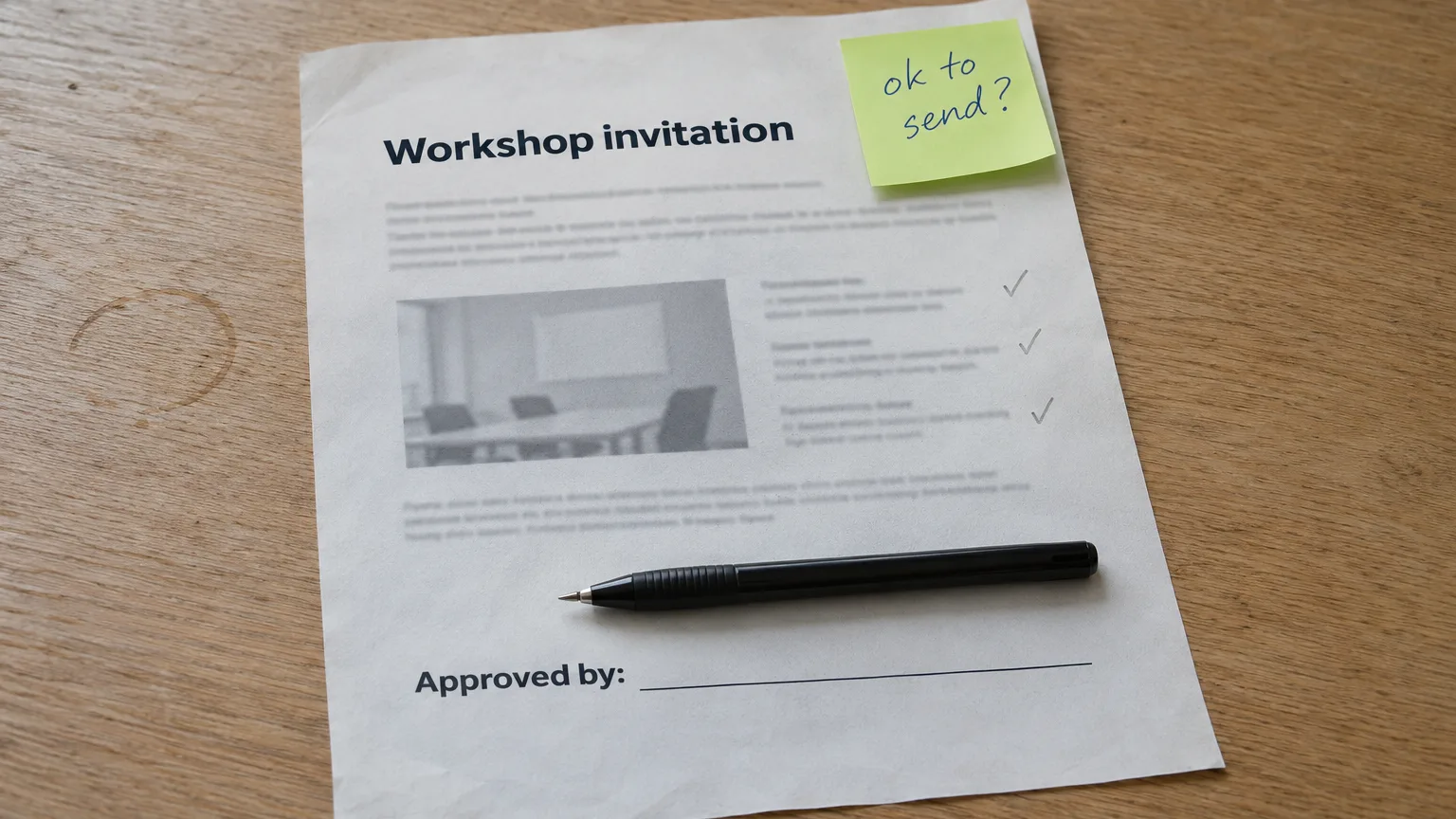
Agents prepare the landing page, the visual and the invitation. A person reviews them, checks the date, the links and the audience, and approves the exact version and the actions. Only then does the page go live, the post get published and the invitations get queued, with the files, the approval and the receipts kept together.
Want to see what you’d hand over first? Tell us about a task or see the plans.